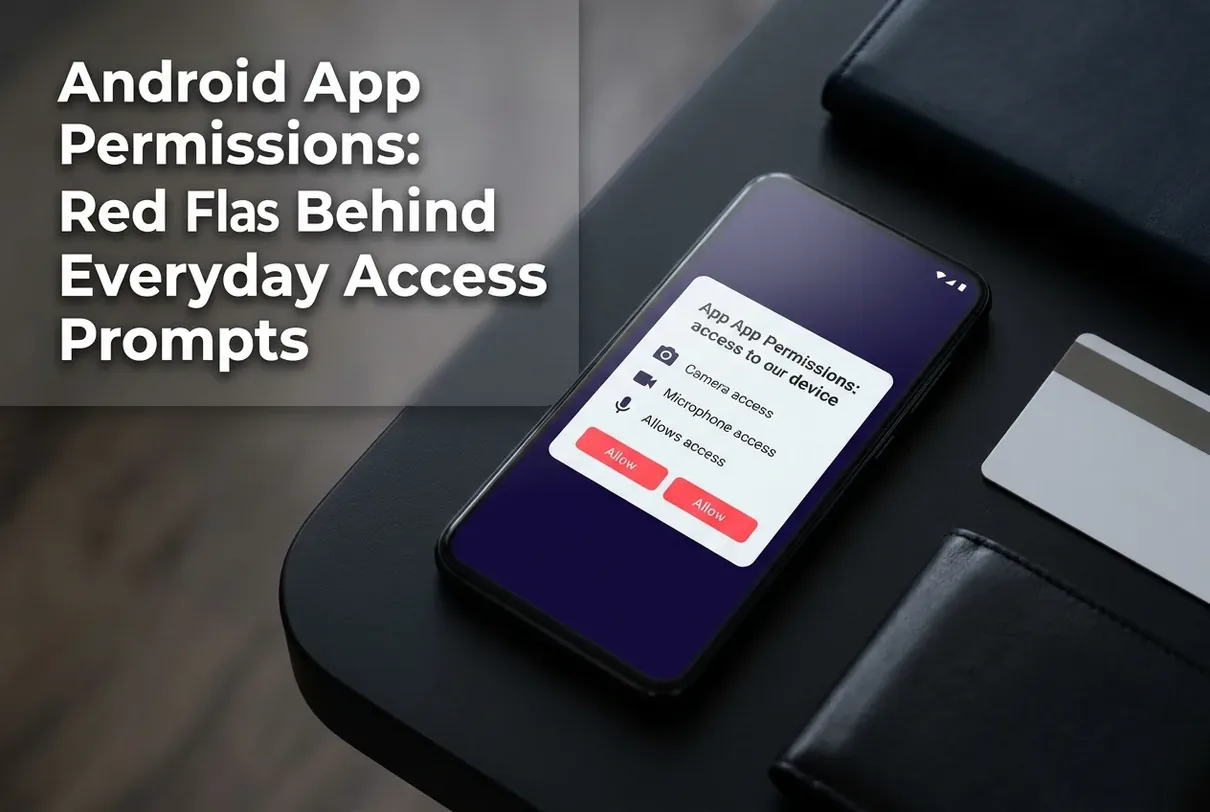
Fake Betting Apps: Uncovering the Anatomy of Betting Scams
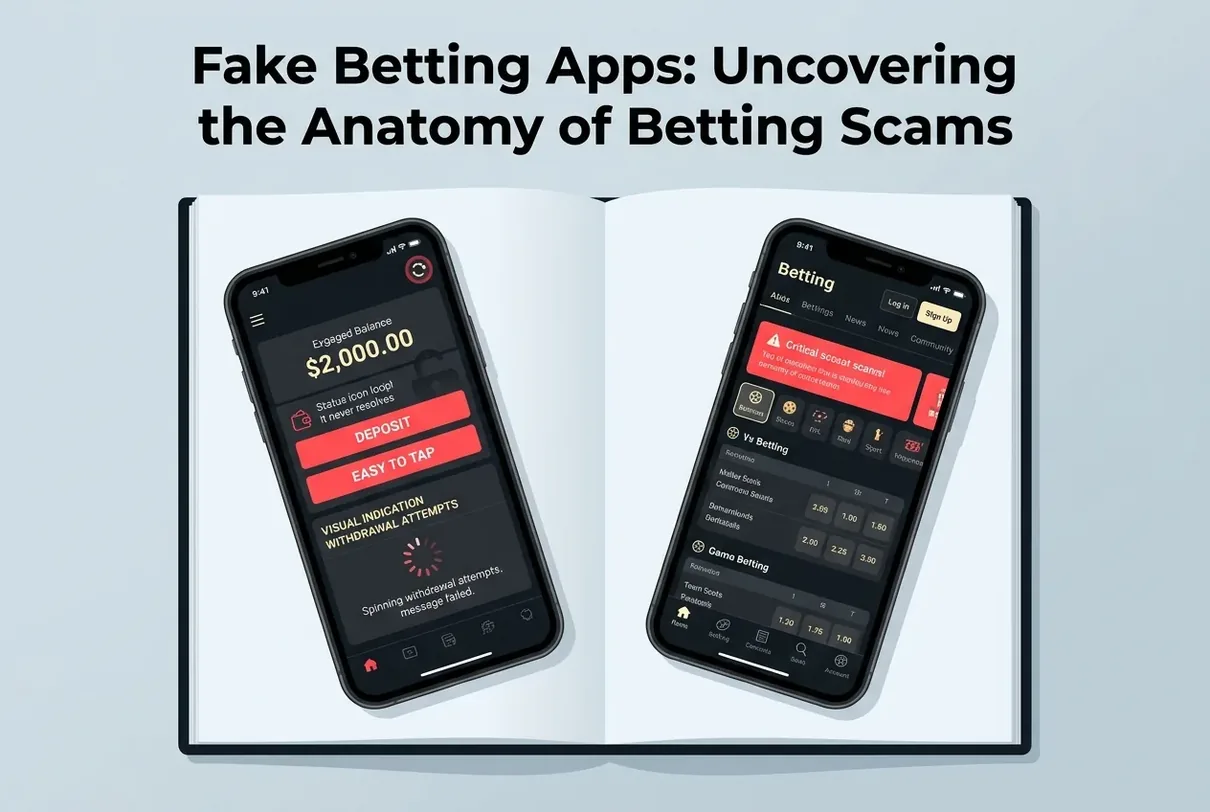
Fraudulent developers create fake betting apps that request deposits and collect personal information. These apps refuse to process withdrawals, allowing the developers to keep the funds rather than pay users. Criminals use such apps to obtain user credentials. Users risk losing money and having their identities stolen. In some cases, warning signs may become apparent. When users recognize these signs early, they lower the chance of financial loss or identity theft.
- Potential bettors face these risks;
- Counterfeit apps imitate established brands;
- Deposit methods receive top priority;
- Withdrawal requests trigger new barriers;
- Personal data becomes compromised assets;
- Installation-stage indicators reveal hidden dangers.
Fake Betting Apps Explained
Hidden gambling scams replicate authentic apps. These scams collect user funds and personal information. Observable characteristics separate fraudulent apps from genuine ones. Recognizing these differences helps users avoid financial loss, which is most effective at the earliest evaluation stage.
| Aspect | Detail |
|---|---|
| Primary purpose | Steal deposits and data |
| How balances appear | Inflated artificial numbers displayed |
| Typical deposit focus | Easy instant top-up methods |
| Withdrawal behavior | Blocked delayed or impossible |
| Data collection goals | Banking credentials identity documents |
| Common visual style | Cloned brand logos colors |
| Usual payment options | Crypto gift cards wire |
| Expected user location customization | Regional currency language ads |
| How promotions look | Unrealistic bonus guarantees offered |
| What odds typically show | Suspiciously high return rates |
| Support communication channels | Messaging apps only contact |
| How long they operate | Weeks then sudden disappearance |
| Domain switching habits | Frequent rebranding under variations |
| App distribution routes | Sideload links unofficial stores |
| Document requests | ID scans after wins |
| Fee patterns | Sudden withdrawal tax demands |
| Use of artificial wins | Early small wins encourage |
| Response to complaints | Ignored deleted or deflected |
| Typical end state | Complete app closure vanishes |
Who Should Read This Guide
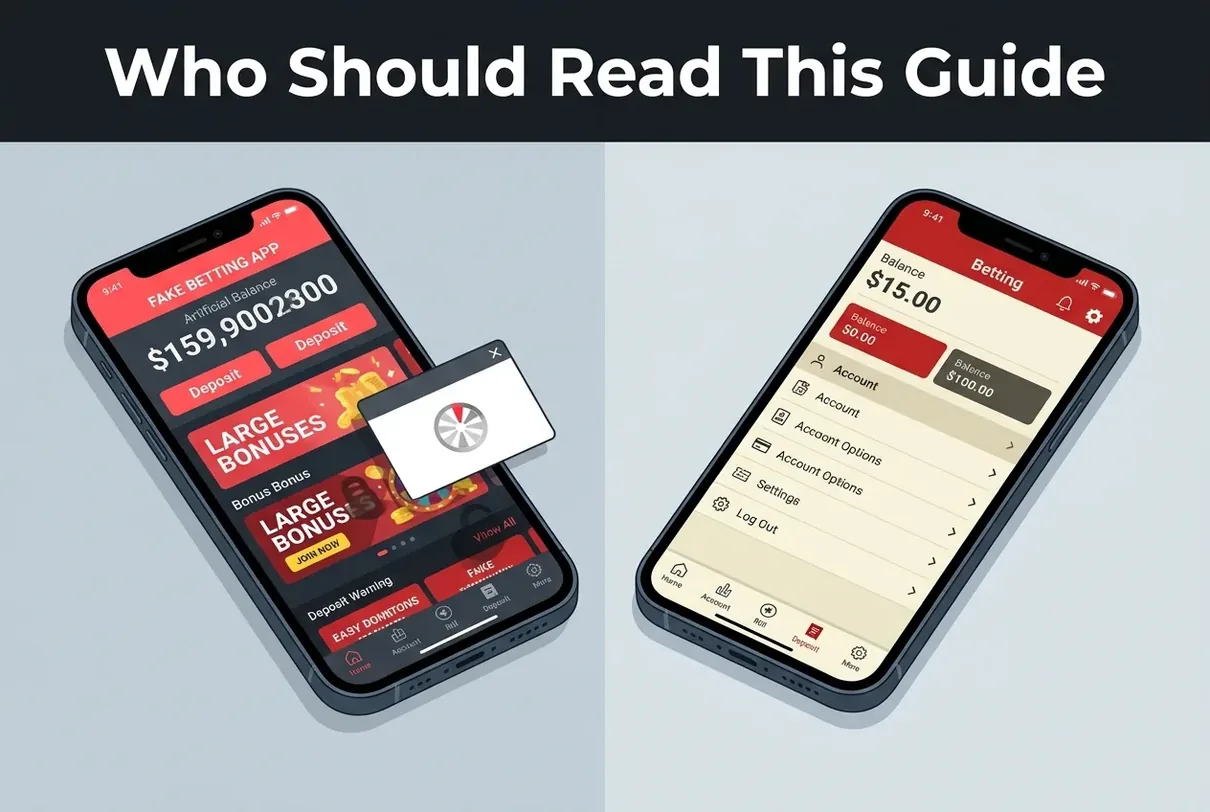
This text uses visual checks to guide installation decisions and benefit various reader categories. Readers review visual checks during registration, and deposit commitment is considered during registration.
- New to online betting apps;
- Tempted by unusually large bonuses;
- Planning to install unfamiliar apps;
- Concerned about losing deposits completely;
- Worried about sharing identity documents;
- Need quick verification at the registration stage.
How Fake Betting Apps Operate
Fraudulent apps collect deposits and then block withdrawals. Recognizing these steps helps people spot scams before sending money.
| Stage | What You See | Hidden Goal |
|---|---|---|
| App discovery | High bonuses advertised online | Attract new targets |
| Signup | Quick registration process | Collect personal data |
| First deposit | Easy payment methods | Secure funds quickly |
| Early wins | Account balance grows fast | Build false confidence |
| Higher deposit push | Bonus requires more funds | Extract additional money |
| Withdrawal attempt | Processing delays appear | Stall access indefinitely |
| New fees | Taxes or verification required | Request more deposits |
| Account freeze | Login becomes impossible | Cut communication channels |
| Disappearance | Website goes offline | Vanish with deposits |
Imitation Names Logos And Sites
Imitation influences the way betting apps attract new users. Developers rely on familiar brand identities, which helps lower suspicion and makes the account registration process faster.
| Copying Tactic | What To Notice |
|---|---|
| Nearly identical name | One letter changed or swapped |
| Extra letters or numbers | Added suffix after brand name |
| Slightly altered logo colors | Shade differs from authentic version |
| Unusual domain endings | Unfamiliar country code or extension |
| Added words | Terms “pro” or “vip” appended |
| Copied homepage layout | Interface duplicates established design |
| Fake license badges | Unverifiable regulatory symbols displayed |
| Cloned login pages | Authentication screens replicate originals |
Download Links And Installation Routes
Fraudulent developers avoid official stores. They use alternative download paths and guide users through installation steps that obscure the software’s origin.
- A link in an advertisement or message promises exclusive access to fake betting apps;
- Landing on a professional-looking website that displays logos, banners, and download buttons;
- The download path redirects through two or three unfamiliar domains;
- Receiving instructions to enable unknown sources in device security settings;
- Downloading an installation file with a generic or misleading filename;
- Installing the application outside any major app store;
- Opening the newly installed application and seeing a registration screen;
- Entering personal details and payment information to activate the account.
Signup Forms And Data Requests
Users encounter registration screens when creating an account, but fake betting apps continue requesting unexpected personal and financial documents even after sign-up is complete.
| Requested Item | Why It Matters |
|---|---|
| Full name | Enables identity theft attempts |
| Supports phishing campaign databases | |
| Phone number | Grants SMS interception opportunities |
| Home address | Facilitates financial fraud scenarios |
| Bank card details | Permits unauthorized transaction processing |
| Crypto wallet | Allows irreversible fund transfers |
| Selfies or ID scans | Creates fake document portfolios |
| One-time SMS codes | Bypasses account security controls |
| Other betting logins | Compromises legitimate site accounts |
Deposit Patterns In Fake Apps
Fake betting apps encourage users to deposit money through their payment systems. When users attempt to withdraw funds, they face obstacles. Deposits flow into the app, but users are unable to retrieve their money.
- Deposits easier than withdrawals;
- Money enters fast, exits never;
- Small minimums, high barriers later.
Displayed Balances And Artificial Winnings
Fake betting apps display account balances and winnings, but they alter these numbers to encourage users to deposit more money and continue using the app. Users can look for two signs to spot this kind of manipulation:
| On-Screen Signal | Possible Meaning |
|---|---|
| Automatic wins after signup | Pre-programmed simulation to encourage trust |
| Impossible win streaks | Algorithm designed to inflate confidence |
| No losing bets shown | Transaction history excludes unfavorable outcomes |
| Balance rising without bets | Fictional credits added without activity |
| Huge bonuses after deposits | Artificial incentive to request withdrawals |
| Locked “bonus” balance | Displayed funds remain permanently inaccessible |
| Profit claimed after every game | System prevents realistic loss recording |
| Fake transaction histories | Records fabricated to suggest legitimacy |
Typical Withdrawal Problems
Users encounter issues when attempting to transfer balances into their accounts. When a withdrawal fails, it indicates that the betting app does not plan to release the funds.
- New verification demands and unexpected tax requirements appear only after withdrawal requests;
- Support responses slow down substantially or stop entirely once users request access to funds;
- Users request a small withdrawal;
- The system suddenly demands tax prepayment;
- Additional identity documents appear mandatory for verification;
- Support introduces previously unmentioned withdrawal conditions;
- The account becomes temporarily frozen without explanation;
- New rules require an additional deposit; payouts remain blocked until that condition is met;
- Delays extend indefinitely without stated completion dates;
- Communication channels go silent after repeated requests.
Bonuses Odds And Unreal Promises
Guaranteed or unlimited offers rarely come from legitimate betting apps. Authentic promotions have explicit terms, realistic conditions, and verifiable restrictions. Fake betting apps use exaggerated promises to attract users and collect deposits. Several promotional patterns indicate fraudulent applications.
- Giant matched deposit bonuses;
- Guaranteed daily profit offers;
- 100 percent safe tips;
- Fixed tournament insider claims;
- Free bets requiring big deposit;
- Unclear rollover conditions;
- Expiring tonight only offers;
- High odds far above competitors.
Support Contacts In Fake Apps
Fraudulent developers restrict communication to instant messaging apps and provide automated answers instead of account-specific assistance. Fake betting apps may request confidential information, while legitimate apps do not request confidential information.
| Support Channel | Caution Sign |
|---|---|
| Single Telegram account | No official corporate presence |
| WhatsApp-only contact | Limited professional communication infrastructure |
| Social media DMs | Unofficial support method only |
| Free webmail address | No business domain shown |
| No physical address shown | Unverifiable operational location |
| Slow or copy-paste replies | Automated or generic responses |
| Requests for passwords | Credential theft attempt |
| Requests for verification codes | Account takeover risk |
Technical Clues Of Low Quality
Some of these problems can appear before you sign up. Fake betting apps frequently display such issues.
- Slow page loading everywhere;
- Overlapping buttons and menus;
- Links not working at all;
- Text in mixed languages randomly;
- Spelling errors everywhere visible;
- Empty “terms” pages completely blank;
- Publisher name mismatch with app;
- Frequent maintenance messages constantly.
How Fake Reviews Create Trust
Fake betting apps use fabricated testimonials to appear legitimate. Scammers buy reviews from content farms or create them with automated software. Manufactured endorsements are found on multiple channels and often display specific warning signs.
| Review Pattern | What It Suggests |
|---|---|
| Identical wording on multiple sites | Copy-pasted purchased content |
| Five-star ratings with no detail | Automated bot activity |
| Only recent positive comments | Coordinated fake campaign |
| Negative posts removed quickly | Censorship of authentic feedback |
| Testimonials promising easy riches | Unrealistic fraud claims |
| Review pages linking directly to signup | Promotional disguised as evaluation |
| Multi-language praise appearing suddenly | Rushed international fabrication |
Scam Alerts And Login Traps
Fraud alerts often resemble phishing attempts. Attackers assert that urgent action is needed to obtain login credentials and verification codes. Messages are delivered via email, text, or social media. This tactic is used repeatedly by attackers.
- Receiving a message. A text or email arrives that claims account problems or bonus awards;
- Clicking a link. The message includes a link that appears legitimate;
- Seeing a copied login page. The link loads a page that imitates an authentic betting site;
- Entering details. The user submits their username and password;
- Code request. The fake betting apps page requests one-time verification codes;
- Real accounts later emptied. Scammers access genuine accounts and withdraw funds.
How These Schemes Shift Betting Markets
Developers often change names and move domains. They take these steps to avoid complaints and prevent regulators from intervening when operating in different regions.
- Multiple sites share identical design;
- Repeated use of same file;
- Targeting new seasons regularly;
- Adapting to local currencies quickly;
- Changing payment channels often;
- Moving from one messaging app;
- Reusing support contact names.
Pre-Install Warning Signs
Users can review a checklist before installation to identify betting apps, avoid unreliable options, and prevent losses.
- Check the publisher name in the application store listing for consistency with brand identity;
- Search for independent complaints about deposit disappearances or withdrawal blocks related to the app;
- Examine withdrawal terms for hidden fees, minimum thresholds, and verification requirements at account creation stage;
- Look for realistic support channels that include email addresses and visible contact information beyond messaging applications;
- Scan screenshots for grammar errors, missing text, and inconsistent design elements;
- Verify whether the application appears in major stores rather than requiring direct downloads;
- Be wary of guaranteed-profit advertisements that promise fixed returns or risk-free wins.
FAQ
How to quickly check whether a betting app is legitimate?
Begin by reading user comments from various sources. See if the app links to the brand’s website. Then, look into how users process withdrawals, and observe whether customer support answers requests.
Steps to take after depositing money into a fake betting app?
Save screenshots, transaction IDs, and payment records promptly. Do not make additional deposits. Contact your bank or payment provider to report what happened and ask if they can reverse the payment.
Are all newly launched betting apps unsafe?
New betting apps can operate legally, but before depositing money, confirm the app’s license, identify its owner, review payment policies, and check its reputation.
Related Post